info@maxislands.com
Search For Hotels
Holiday Deals

Jakarta Holidays
$200 Per Person
Prague Holidays
$343 Per Person
Africa Holidays
$150 Per PersonA Brief History Of The MaxIslands
Ever since early prehistoric time
Today
A hard working and enterprising people, the Maltese benefit from one of the best heath services anywhere in the world, free education and one of the lowest unemployment rates in
Definitely a visit to
Malta, an archipelago made up of three main islands: Malta, Gozo, and Comino, is the smallest member
of the European Union, with a population of just 400,000. Notwithstanding, its small land area of 316 square kilometres, makes Malta one of the most densely populated countries in the world.
Malta?s main industries are tourism, transhipment, and manufacturing. The natives themselves, being very enterprising engage in a number of activities and services thus creating an almost self-sufficient economic microcosm.
Mainly Roman Catholic, the Maltese speak a Semitic language that owes its roots to the ancient Phoenician tongue which was spoken on the island some 3000 years ago. The Arabs further fostered the language during their occupation of Malta in the middle ages. Subsequently the language was fortified with borrowed terms from nationalities, predominantly Latin, that governed the islands through the centuries and being lastly strongly influenced by the English Language.
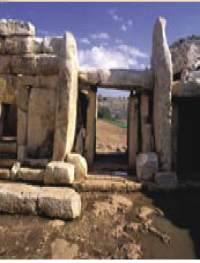
The first settlers discovered Malta around 5000 BC. The early civilisations built the enigmatic copper age temples known as the oldest freestanding structures in the world. Being associated with the Great Flood, Atlantis and other proven and hypothetical cultures these ancient structures mystify many a visitor as they have baffled many authors who have visited them and wrote about them.
At the dawn of the Iron Age Malta was settled by the Phoenicians and later by their descendants the Carthaginians. The Romans conquered Malta during the 2nd Punic war.
